
Plant of the Month: Stipa Tenuissima
Revered for its delicate, tactile quality and graceful, fountain-like habit, this semi-evergreen ornamental grass adds unbeatable movement, texture, and light to the garden.
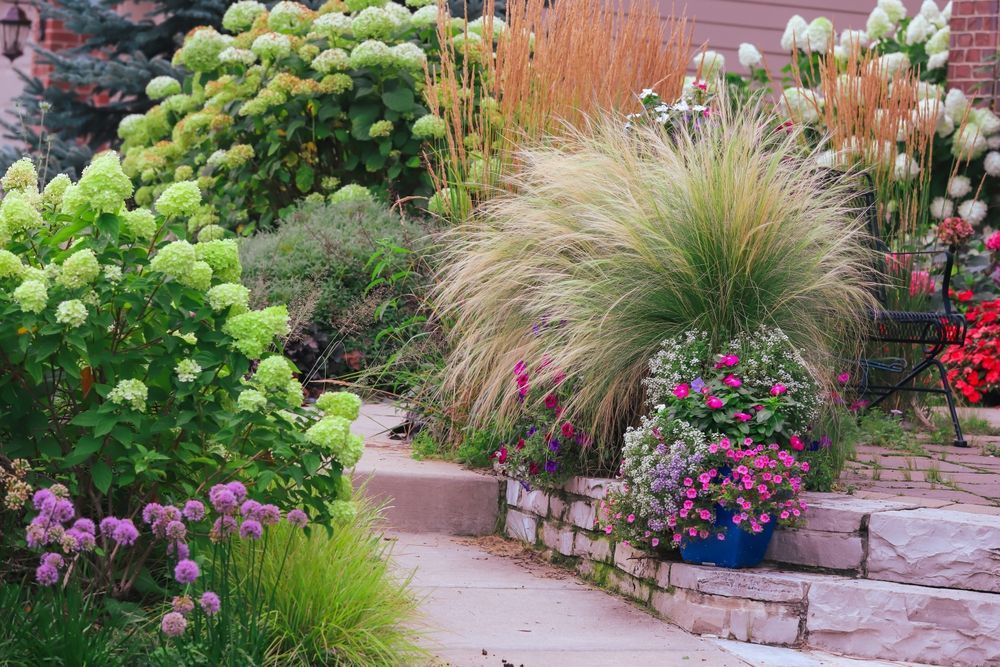
Native to the open grasslands, rocky slopes, and dry plains of the southwestern United States, Mexico, and Argentina, Stipa tenuissima - commonly known as Mexican Feather Grass or Pony Tails - is revered for its delicate, tactile quality and graceful, fountain-like habit. This semi-evergreen ornamental grass adds unbeatable movement, texture, and light to the garden from late spring right through to winter.
Featuring ultra-fine, needle-like green foliage, Stipa tenuissima forms neat, dense tussocks that sway effortlessly in the slightest breeze. In early summer, it bursts into a haze of soft, silvery-green flower plumes that mature into shimmering golden-buff seed heads. Its airy, light-capturing nature makes it an essential structure plant, catching the low morning or late afternoon sun and providing year-round visual interest even as the garden slumbers in winter.
Key Features:
- Flower Colour: Soft silvery-green flower plumes that ripen into shimmering pale gold and straw-yellow seed heads by late summer.
- Size: Compact and graceful, typically growing to 30–60cm in height with a spread of 30–45cm.
- Hardiness: Fully hardy (down to -15°C); highly tolerant of heat, cold snaps, and exposed, windy sites.
- Sunlight: Requires full sun to thrive and develop its characteristic golden tones; will become floppy if planted in shade.
- Soil: Prefers light, poor-to-moderately fertile, free-draining soil. Thrives in sandy, gravelly, or chalky soils and will deteriorate in heavy, waterlogged clay.
- Maintenance: Very low maintenance. Requires minimal watering once established and needs a quick comb-through in spring rather than heavy pruning.
Uses:
- Gravel and Prairie Gardens: The ultimate grass for dry, Mediterranean, gravel, or prairie-style landscapes, where its fine texture softens hard landscaping and gravel paths.
- Borders and Swathes: Planted en masse, it creates a sweeping, cloud-like motion across borders, interweaving beautifully with perennials like Echinacea, Salvia, and Verbena bonariensis.
- Container Displays: Excellent in patio pots, adding dynamic movement, height, and architectural contrast to potted summer arrangements.
Planting and Care:
- Planting: Best planted in spring or early autumn. Choose a sunny spot with exceptionally sharp drainage; mix grit into the planting hole if your garden soil tends to retain moisture.
- Watering: Water regularly during its first season to help the root system establish. Once settled, it is exceptionally drought-tolerant and rarely needs supplemental watering.
- Fertilising: Does not require fertilisation. In fact, rich soils and fertilisers cause weak, floppy growth; poor soil keeps it neat and compact.
- Pruning: Do not cut down to the ground. In early spring, put on gardening gloves and run your fingers through the tuft like a comb to pull away dead foliage and old seed heads, making room for fresh growth.
Did you know?
Stipa tenuissima is so responsive to air currents that landscape designers often plant it specifically to "make the wind visible" in urban or static garden spaces! Its fine foliage also catches morning dew drops like tiny crystals, making it a photographer's dream on cool, misty autumn mornings.